
What is Parkinson’s Disease?
Parkinson’s disease is a progressive neurological movement disorder. It is considered a movement disorder because it affects how a person moves. In addition to movement symptoms, Parkinson’s also impacts other parts of the body and has additional non-movement symptoms.
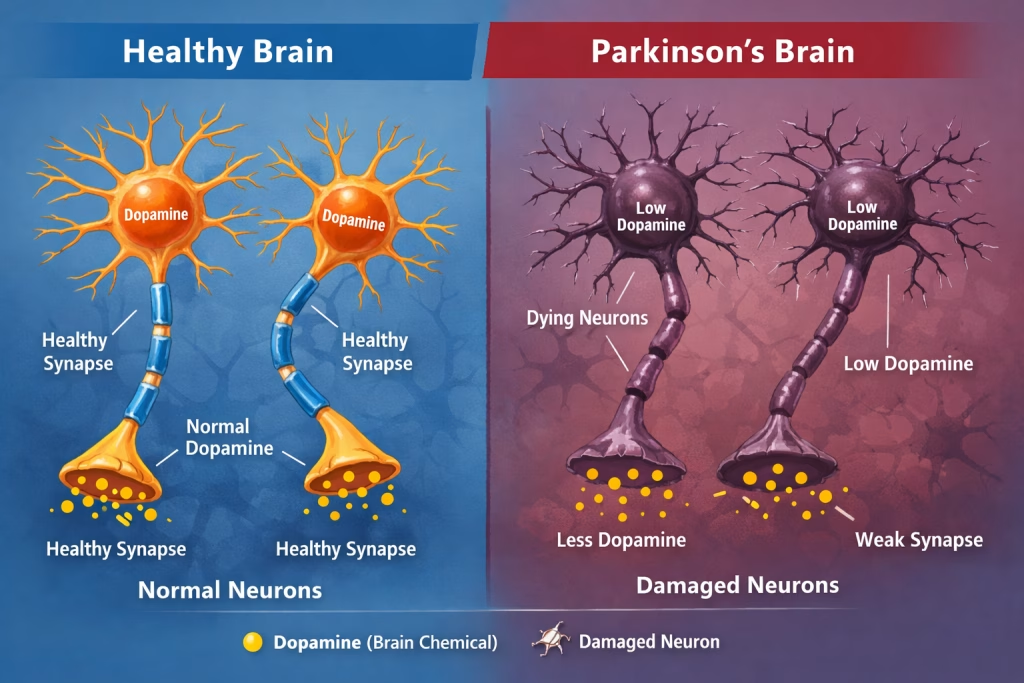
Parkinson’s develops when certain cells in the brain, called neurons, stop working correctly or die. These cells are found in a part of the brain called the substantia nigra. These cells produce a neurotransmitter called dopamine, which controls movement. As dopamine levels decrease, it becomes harder to control movement.
Parkinson’s affects everyone differently, and symptoms change over time.
Parkinson's Symptoms
Common Movement Symptoms
- Tremors (shaking)
- Rigidity or stiffness
- Bradykinesia (slowed movement)
- Balance problems
All of these symptoms do not need to occur to have Parkinson’s disease.
Common Non-Movement Symptoms
- Mood changes, such as depression, anxiety, or apathy
- Sleep difficulties
- Digestive issues
- Speech and swallowing issues
- A drop in blood pressure when standing, called orthostatic hypotension
There are many other non-movement symptoms. These may appear before movement symptoms and can have a greater impact on daily life.
The exact cause of Parkinson’s is unknown. However, it is believed to be a combination of environmental and genetic factors. A small percentage of people with Parkinson’s have a family history and identified genetic mutations. Environmental factors including exposure to pesticides, heavy metals, and other chemical exposures are believed to be linked to Parkinson’s disease.
There is no cure for Parkinson’s. However, there are a variety of treatment options to manage the symptoms, including medications, surgeries, physical and occupational therapy, speech therapy, and exercise. Treatments can help people with Parkinson’s remain active for years or even decades.
Statistics on Parkinson’s Disease
- There are approximately 53,000 people living with Parkinson’s throughout North and South Carolina.
- Approximately 1.1 million Americans are living with Parkinson’s disease. This is more than the the combined number of people diagnosed with multiple sclerosis, muscular dystrophy, and Lou Gehrig’s disease (ALS). This number is expected to grow to 1.2 million Americans by 2030.
- Approximately 90,000 Americans are diagnosed with Parkinson’s disease each year, and this number does not reflect the thousands of cases that go undetected.
- An estimated seven to 10 million people worldwide are living with Parkinson’s disease.
- The average age of diagnosis is 60 years old, with symptoms usually beginning earlier. However Parkinson’s is not a normal part of aging.
- Between 5-10% of people with Parkinson’s are diagnosed before 50, called Young-onset Parkinson’s disease.
- Men are 1.5 times more likely to have Parkinson’s than women.
What Does Parkinson's Cost?
- The combined direct and indirect costs of Parkinson’s, including medical treatments, social security payments and lost income from not being able to work, is estimated to be nearly $82.2 billion per year in the United States alone.
- Medications can cost an average of $2,500 a year for someone with Parkinson’s. Surgeries cost up to $100,000 per person.
- Approximately 90% of direct costs for Parkinson’s are paid by Medicare and Medicaid.